


Jetta Evolution: Unveiling VW’s Iconic Sedan Journey
The Evolution of the Jetta
What do you do when your most popular car is a small hatchback, but your biggest market wants a trunk? In the late 1970s, that was Volkswagen’s billion-dollar question. Their answer was deceptively simple, launching an automotive icon.
The solution was a masterclass in practicality: take the beloved Volkswagen Rabbit and attach a trunk. This direct descendant of the Volkswagen Rabbit sedan is the origin of the first Jetta. For years, the two cars shared nearly everything from the windshield forward, providing drivers with a familiar experience and the added cargo space they desired.
In the car world, this shared foundation is called a “platform.” This platform-sharing strategy is the key to the Jetta’s evolution and its long-running relationship with the Golf.
The ’80s and ’90s: Why a Bigger, Boxier Jetta Took Over America
As the 1980s rolled in, Volkswagen realized that to truly win over American drivers, its “Rabbit with a trunk” needed to grow up. The second-generation Jetta, which debuted in 1984, did exactly that. Embracing the era’s trends, it became significantly larger, boxier, and more accommodating, with a cavernous trunk and a much roomier back seat. This was a direct response to what families wanted: a practical, no-fuss car that could handle everything from grocery runs to road trips.
The strategy was a massive success. This bigger Jetta, known for its workhorse reliability, resonated deeply with buyers. It was simple, efficient, and built to last. For a long stretch, this humble sedan became the best-selling European car in North America, cementing the Jetta name as a household staple.
But Volkswagen knew that practical didn’t have to mean boring. For drivers who wanted more thrill, the company offered a special version: the Jetta GLI. Think of it as the standard Jetta’s athletic twin. The GLI took the sensible sedan body and packed in a more powerful engine and sport-tuned suspension from its feisty hatchback sibling, the Golf GTI. It was the perfect formula: a car that looked responsible but delivered a genuinely fun-to-drive experience.
By establishing itself as both a durable family car and an accessible sport sedan with the GLI, the Jetta had found its identity in America. For its next act in the late 1990s, however, Volkswagen would aim for something entirely different: a touch of luxury.
The Jetta’s Glow-Up: How It Suddenly Felt Like a Luxury Car
When the all-new Jetta arrived for the 1999 model year, it was clear that Volkswagen was no longer aiming for just practicality. The design was a complete departure, replacing boxy shapes with smooth, rounded lines for a sleek, sophisticated profile. Inside, the transformation was even more dramatic, greeting drivers with soft-touch dashboards, quality fabrics, and an iconic blue-and-red instrument glow at night. For an economy sedan, it felt surprisingly upscale—like a taste of a much more expensive German car.
This new premium feel extended to the driving experience. Volkswagen introduced a groundbreaking engine option: the turbocharged 1.8-liter, or “1.8T.” A turbocharger forces more air into the engine, giving a small, efficient motor the power of a larger one. This gave the Jetta an exhilarating burst of speed on demand, making it fun for city driving or highway merging.
For those who wanted smooth, effortless power, Volkswagen offered another trick up its sleeve: the legendary VR6 engine. This unique VW design ingeniously packed six cylinders into a compact space. The result was an engine known for its silky-smooth power delivery and a deep, satisfying hum that sounded unlike anything else in its class. Driving a VR6-equipped Jetta felt confident and refined, further cementing its reputation as a premium car in a non-premium package.
This combination of upscale design and exciting engines created a generation of Jetta that many fans still consider a high point. It successfully carved out a niche as the smart, fun-to-drive alternative to more mainstream sedans. But this premium experience came with a higher price tag, a challenge Volkswagen would have to address head-on as it planned the Jetta’s next evolution.
The Mainstream Push: What It Cost to Make the Jetta More Affordable
While the premium Jetta of the 2000s won critical acclaim, its higher price tag made it a tough sell against more affordable rivals. So, for the Jetta that launched in 2011, Volkswagen made a bold strategic pivot. The goal was to compete directly with the best-selling sedans in America on price and practicality. To hit a lower starting price, some deliberate trade-offs were made.
This new model featured a simpler design. The soft-touch dashboard materials were replaced with harder, more durable plastics, and the sophisticated rear suspension was swapped for a less complex, cost-effective design. While enthusiasts noted the difference in handling and feel, these changes were a calculated business decision to make the car more accessible.
The bet paid off handsomely. In exchange for a few premium touches, buyers received a Jetta that was significantly less expensive and, just as importantly, had a much larger back seat and trunk. This focus on affordability and space resonated strongly with American families. The Jetta’s popularity soared, becoming one of Volkswagen’s best-selling models. This mainstream success set the foundation for the Jetta’s next leap.
From Analog Roots to a Digital Future: What Defines the Jetta Today?
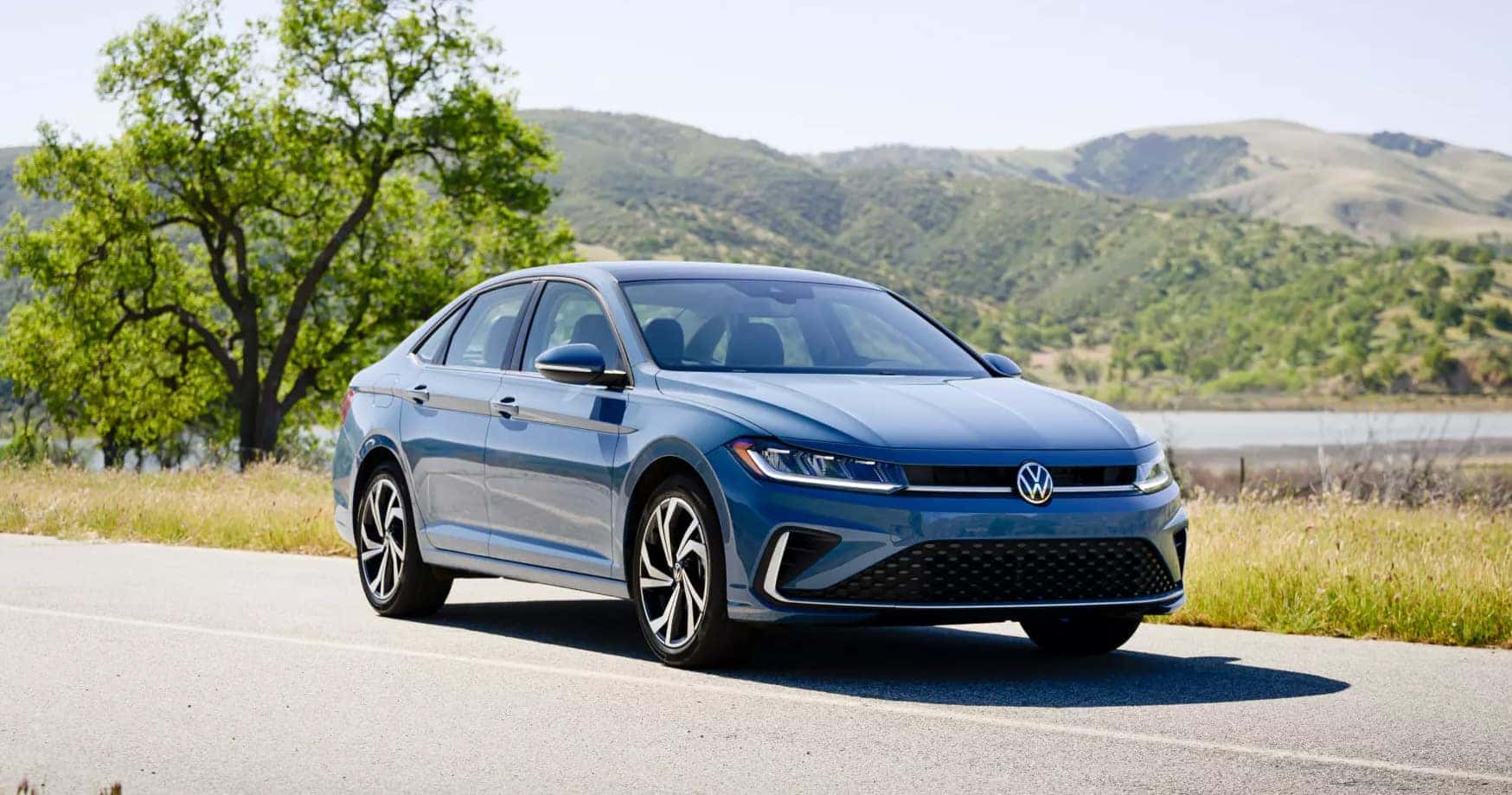
The modern Jetta is a direct descendant of that original, boxy sedan, and its core mission has never wavered: to be a smart, practical car for the real world. That simple idea, born from adding a trunk to a hatchback, has survived and thrived for over four decades.
Today, its evolution is visible not just in its sleek body lines, but on its dashboard. The high-tech glow of a digital cockpit has become the new measure of a premium feel, replacing the soft-touch plastics of the past. Underneath the metal skin, the Jetta shares its sophisticated “MQB” platform—the ultimate version of VW’s original cost-saving idea—with everything from small hatchbacks to large SUVs.
This invisible thread of efficiency defines the car’s story of clever adaptation. It connects every generation, turning a common car into a fascinating lesson in automotive evolution.
Ready to experience how far the Volkswagen Jetta has come for yourself? The best way to understand the evolution is from behind the wheel.
Explore our available Jetta models and schedule your test drive today. Our team will help you find the trim and features that fit your needs and get you on the road with confidence!
0 comment(s) so far on Jetta Evolution: Unveiling VW’s Iconic Sedan Journey